
Home Maintenance Tasks New Lenox Homeowners Are Probably Forgetting Before Illinois Winters Hit
Illinois winters have a way of exposing every overlooked corner of a home. By the time January’s subzero temperatures settle over New Lenox, the small maintenance tasks postponed during the busy fall season can transform into expensive emergencies. Having served home and business owners across New Lenox, IL and surrounding areas for 53 years, we at Magtek Mechanical have seen firsthand how a handful of forgotten chores can lead to frozen pipes, failed furnaces, and skyrocketing energy bills.
The good news is that most of these tasks take only a few hours to complete, yet they can save thousands of dollars in repair costs and keep your family comfortable when temperatures plunge. Below are the maintenance items we find homeowners most often neglect, along with detailed guidance on why each one matters for an Illinois winter.
Heating System Preparation That Goes Beyond a Filter Change
Most homeowners remember to swap out the furnace filter, but truly preparing a heating system involves much more. A thorough fall tune-up includes inspecting the heat exchanger for cracks, testing the ignition system, calibrating the thermostat, cleaning the blower assembly, and checking gas pressure. Skipping these steps is the number one reason we receive emergency furnace repair calls during the first deep freeze of the season.
Carbon monoxide detection often gets overlooked too. The combination of running furnaces, closed windows, and aging combustion equipment makes winter the highest-risk season for carbon monoxide exposure. Test every detector in your home, replace batteries, and remember that the sensors themselves typically expire after seven years even if the unit still chirps when tested.
Outdoor Tasks That Protect Indoor Comfort
The exterior of your home plays a massive role in how hard your heating system has to work. Many New Lenox homeowners forget these critical outdoor tasks until snow is already on the ground:
- Disconnect and drain garden hoses because trapped water expands when frozen and can crack the spigot or even split interior pipes connected to outdoor faucets.
- Clean out gutters and downspouts to prevent ice dams that force melting snow back under shingles and into attic insulation.
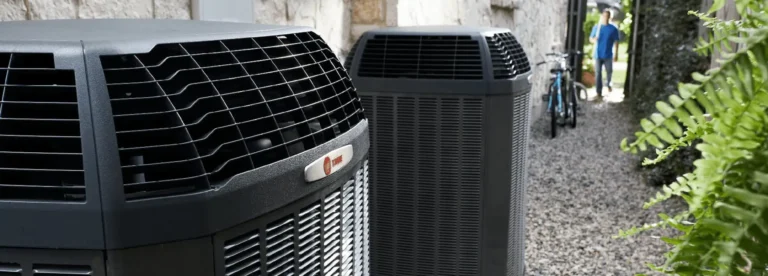
- Cover the outdoor condenser unit loosely with a breathable cover to keep debris out without trapping moisture that could rust the coils.
- Seal gaps around foundation penetrations where cable, gas, and electrical lines enter the home because mice seek warmth and small openings invite drafts.
- Trim tree branches hanging near the roof or power lines that could break under ice loads during a January storm.
Each of these tasks addresses a different failure mode, and ignoring any one of them creates a weak link in your home’s winter defenses. We frequently respond to service calls where a single uncovered outdoor faucet led to a burst pipe inside an exterior wall, causing damage that took weeks to repair.
Ductwork, Insulation, and Air Sealing
Even a brand-new high-efficiency furnace cannot overcome a leaky duct system or poorly insulated attic. Before winter arrives, walk through your basement and inspect visible ductwork for separated seams, crushed sections, or disconnected runs. Mastic sealant or metal-backed tape can close gaps that are silently dumping heated air into unconditioned spaces.
Attic insulation tends to compress and settle over the years. New Lenox homes built more than 20 years ago often have insulation levels well below current recommendations of R-49 or higher. Adding blown-in insulation is one of the most cost-effective upgrades you can make, and it directly reduces the workload on your furnace during extended cold snaps.
Plumbing Protection Often Overlooked
Frozen pipes account for a significant portion of winter homeowner insurance claims across northern Illinois. The pipes most at risk run through exterior walls, unheated basements, crawl spaces, and garages. Wrapping these pipes with foam insulation sleeves is inexpensive and quick.
Another forgotten task involves locating and testing the main water shutoff valve. In an emergency, you need to find this valve in seconds, not minutes. Confirm that the valve turns freely and that everyone in the household knows its location.
Indoor Air Quality and Humidity Balance
Winter air in heated homes can drop to humidity levels below 20 percent, which damages wood floors, cracks furniture, and aggravates respiratory issues. A whole-home humidifier installed on your furnace addresses this automatically, but it requires annual maintenance including pad replacement and water panel cleaning.
- Replace humidifier pads before the heating season begins to ensure proper evaporation rates.
- Inspect and clean ventilation fans in bathrooms and kitchens because they manage moisture that would otherwise condense on cold windows.
- Verify damper operation on fresh air intakes to prevent excessive cold air from entering during extreme weather.
Tackling these forgotten tasks before the first hard freeze positions your home and family for a comfortable, safe, and efficient winter season across New Lenox and the surrounding communities.